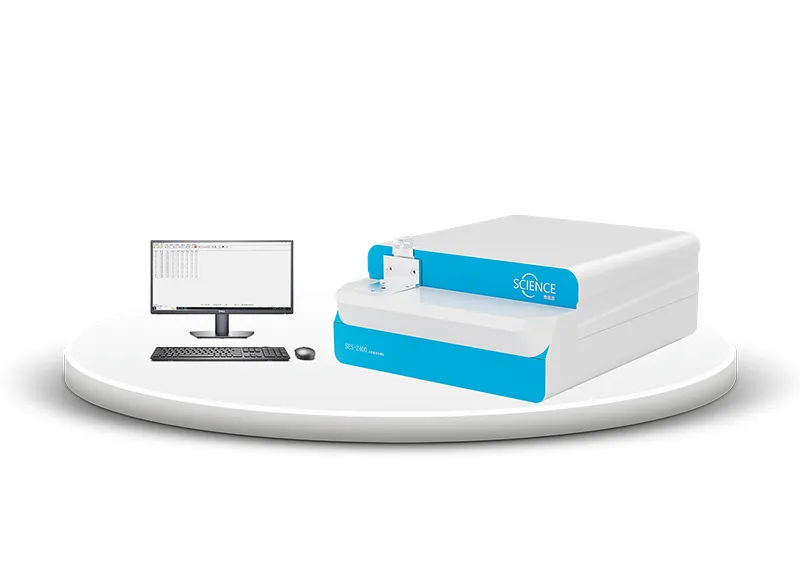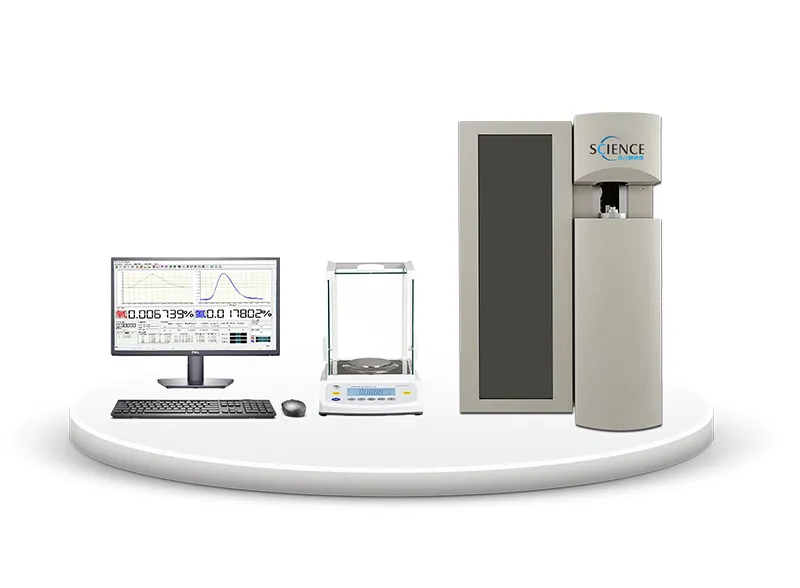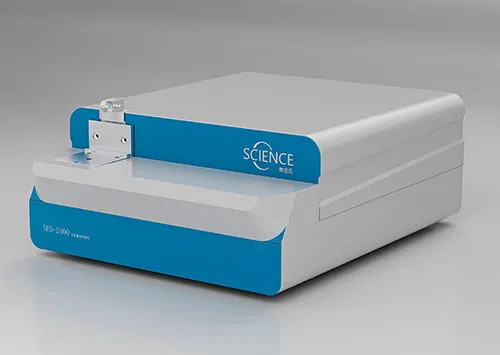
PMT (Photomultiplier Tube): PMT is for point (or line) measurement and can only read discrete spectral lines. Each element corresponds to one PMT, so at least one tube is needed for each element. The spectral line is received at a single wavelength and cannot be received continuously, which severely limits the choice of analytical spectral lines. The more elements you want, the more PMTs you need. It is basically impossible to add new analytical matrices to a PMT-based spectrometer. Even if it were possible to add one or two, the results would be very poor due to physical space limitations, and the cost would be extremely high.
CCD (Charge-Coupled Device): A CCD performs area (or zone) measurement and requires deep cooling to improve the signal-to-noise ratio. However, the number of CCDs is far fewer than PMTs. Three CCDs can cover the vast majority of elements (full spectrum), and you can select analytical spectral lines based on your needs. In particular, it is possible to use the principle that one element can have multiple characteristic spectral lines to perform analysis using several of them. It is easy to add channels later, making it convenient to add new matrices and elements. Compared to traditional channel-based (PMT) technology, it is much more flexible. If a user needs to add a new element for analysis in the future, they only need to add the corresponding analytical program without changing the instrument's hardware, making upgrades very convenient. The long-term cost of CCD technology is lower than that of PMT.
PMT: PMTs (which perform photoelectric conversion and current amplification) have a high signal-to-noise ratio, high sensitivity, and a fast fatigue recovery. Achieving a full spectrum is basically difficult for a company to do.
CCD: With its high sensitivity and multi-channel capabilities, a CCD has low detection noise and performs simultaneous signal measurement. It can read a continuous spectrum within a certain spectral region. When combined with an echelle grating and a 2D CCD array, it can even read the entire atomic emission spectrum, making "full-spectrum" measurement possible. These features make CCD the preferred choice in modern metal analysis spectrometer applications.
Due to the blurring effect and the lack of a current amplification function, the precision of a single-element analysis is not as high as that of a PMT. However, some advanced CCD devices can achieve PPM-level analytical precision. For example, the detection limit for Ag in Sn materials can be as low as 0.0001%, which is already very high, and the technology continues to develop. In general, a detection limit of 10 ppm is reliable. If a lower detection limit (LOD) is required (e.g., for pure metal analysis or certain special military-grade alloys where the detection limit is 1 ppm or 0.1 ppm), it is best to choose a PMT.
The use of quartz and MgF2 entrance windows allows for the analysis of UV elements with wavelengths as low as 115nm (N, O), making it more reliable for UV and VUV element analysis. It also supports statistical techniques to evaluate segregation in inclusions.
Similar to a full-spectrum ICP-OES, a CCD can display the spectrum and show interference with the elements being measured, whereas a PMT cannot.
CCD: The grating density is generally 3000-3600 lines/mm.
PMT: The grating density is generally 2400-3600 lines/mm, and the spectral resolution is better.
CCD: CCDs use gratings with a short focal length, which requires less space. A shorter optical path also results in less light loss. From a photoelectric detection perspective, a CCD is far superior to a PMT in terms of both photon efficiency (QE) and spectral coverage. CCDs also occupy less space than PMTs, allowing for a compact and portable design that is easy to use and suitable for both laboratories and on-site work. Compared to PMT components, CCDs offer better value for money, and as the technology continues to improve, there is a trend for them to replace PMTs, much like digital cameras replaced traditional film cameras.
PMT: However, as is common with vacuum and solid-state devices in most competitive scenarios, a CCD is not as good as a PMT in terms of response speed and temperature stability.
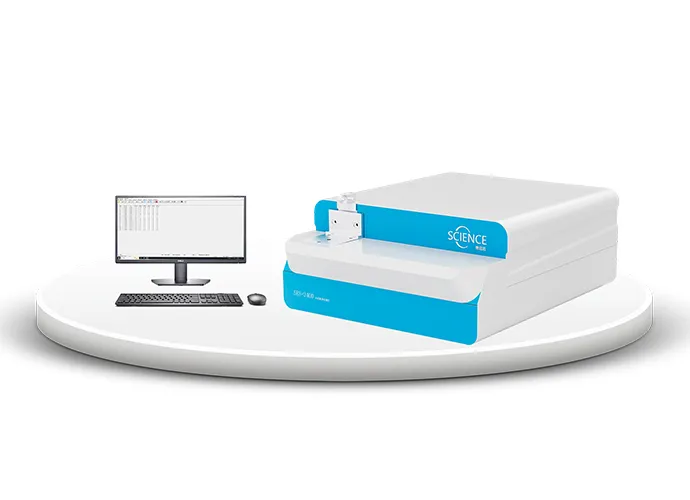
At SYENS, we deliver high-precision metal analysis spectrometers that integrate advanced CCD and OES technologies. Our elemental analysis instrument ensures accurate, reliable, and efficient elemental analysis, supporting industrial quality control and long-term laboratory success.
Optical emission spectrometers (often called "OES or spark discharge spectrometers"), are used to evaluate metals to determine the chemical composition with very high accuracy. A spark is applied through a high voltage on the surface which vaporizes particles into a plasma.
Optical spectrometers are commonly used in laboratories and research institutions to perform chemical analysis. By studying how light interacts with matter, spectrometers can determine the chemical composition of a substance, identify unknown compounds, and even quantify substances in a sample.
ICP-OES has widespread applications across various industries due to its ability to perform rapid multi-element analysis with high sensitivity. It is used extensively in environmental monitoring, food safety, pharmaceutical quality control, and geological studies.
There is no difference between ICP OES and ICP AES. Usage is purely a matter of personal preference. Inductively Coupled Plasma Optical Emission Spectroscopy (ICP-OES) and Inductively Coupled Plasma Atomic Emission Spectroscopy (ICP-AES) refer to the same thing.
Talk to our experts for more help.