Cathode Material: This is a layered or spinel-structured transition metal oxide or polyanionic compound with a high electrode potential and stable structure that can intercalate lithium, such as lithium cobalt oxide, lithium manganese oxide, lithium iron phosphate, and ternary materials. Cathode materials account for a large proportion of the battery, as their performance directly affects the lithium battery's performance, and their cost directly determines the battery's overall cost.
Anode Material: This is a layered graphite, single-element metal, or metal oxide with a potential close to that of lithium, a stable structure, and the ability to store a large amount of lithium. Examples include graphite, mesocarbon microbeads, and lithium titanate. As one of the four main components of a lithium battery, the anode material plays an important role in improving the battery's capacity and cycle performance and is a core part of the midstream of the lithium battery industry.
Electrolyte: This is an organic solvent that contains an electrolyte lithium salt. It provides lithium ions. The electrolyte lithium salts include LiPF6, LiClO4, LiBF4, etc. The organic solvent is mainly composed of one or a mixture of several components such as diethyl carbonate (DEC), propylene carbonate (PC), ethylene carbonate (EC), and dimethyl carbonate (DMC). The electrolyte acts as a medium for conducting ions between the positive and negative electrodes of a lithium battery and is essential for achieving the high voltage and high specific energy of a lithium-ion battery.
Separator: The separator is a polyolefin microporous membrane placed between the positive and negative electrodes to prevent direct contact while allowing Li+ ions to pass through. Examples include polyethylene (PE), polypropylene (PP), or composite membranes like a three-layer PP/PE/PP separator. The performance of the separator determines the battery's interface structure, internal resistance, etc., and directly affects its capacity, cycle life, and safety. A separator with excellent performance plays a vital role in improving the battery's overall performance.
Outer Casing: This refers to the lithium battery's packaging, which mainly includes the aluminum shell, cap, tabs, and insulating film.
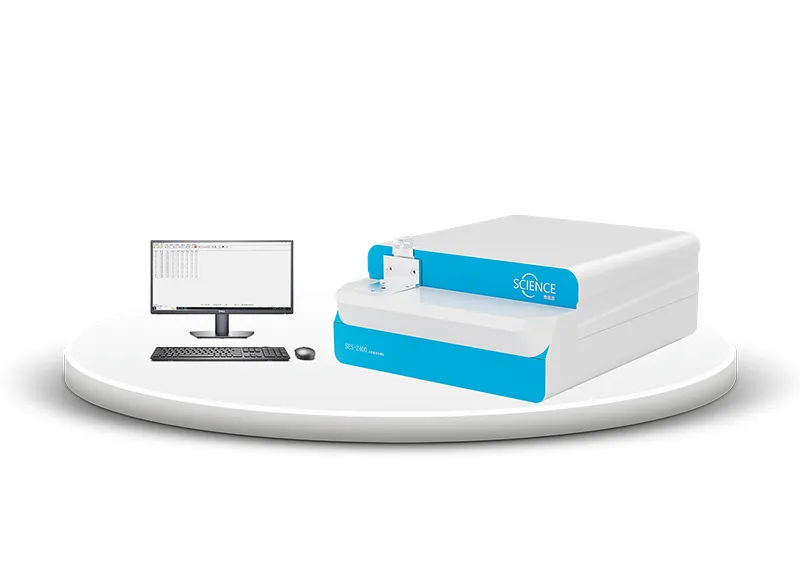
Spectrometer Detection
Content of 10 elements in Lithium Nickel Cobalt Manganese Oxide Cathode Material.As a secondary battery, lithium-ion batteries rely on the movement of lithium ions between the positive and negative electrodes to convert electrical energy into chemical energy. They are favored for their light weight, high energy density, long service life, and environmental friendliness, and are widely used in many fields as consumer electronics batteries and industrial power batteries. The main cathode materials for lithium-ion batteries include lithium nickel cobalt manganese oxide, lithium manganese oxide, lithium cobalt oxide, lithium nickel oxide, and lithium iron phosphate. The layered Li-Ni-Co-Mn-O series materials (referred to as ternary materials) are one of the most popular cathode materials currently being researched. They have a high specific capacity, lower cost, stable cycle performance, and better safety, and are gradually becoming the mainstream cathode materials for applications in small-scale communication and power fields.
Elements are added during the material production process to achieve material modification, but the presence of impurities is also directly related to the battery's performance and lifespan. Therefore, accurately measuring the elemental content of the battery's cathode material is very important for controlling the quality of the battery product. This experiment uses the OES method to determine the content of elements such as Co, Mn, Ni, Na, Mg, Fe, V, Ca, Al, and Cr in lithium nickel cobalt manganese oxide.
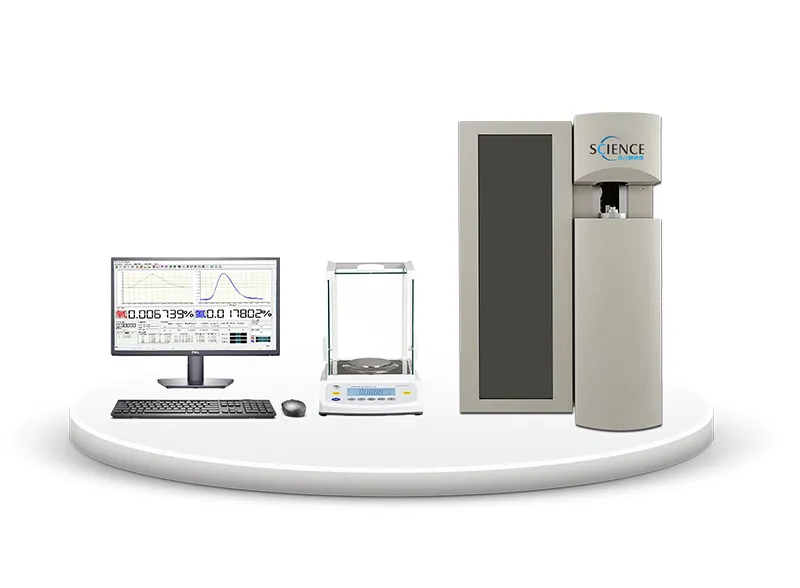
Determination of Carbon and Sulfur in Lithium Iron Phosphate and Lithium Nickel Cobalt Manganese Oxide by High-Frequency Combustion-Infrared Absorption Method
During the preparation of lithium iron phosphate, organic compounds are generally used to coat the material with carbon. As a reducing agent, carbon can effectively prevent the oxidation of bivalent iron at lower temperatures and improve the conductivity of the particles. A high sulfur content can affect the formation of spherical particles during the preparation of lithium iron phosphate, causing small LFP particles to agglomerate, increasing the material's internal resistance, and leading to a significant decrease in discharge capacity and cycle performance. Therefore, controlling the carbon and sulfur content in the material is crucial for the quality and performance of the product.
Testing Impurity Elements in Lithium Battery Anode Material—Graphite Anode
As one of the four main materials of lithium-ion batteries, the anode material can reversibly de-intercalate and intercalate lithium ions. Currently, the mainstream anode material is still graphite. As the energy density of batteries increases, the capacity utilization of graphite anode materials is gradually approaching its theoretical value, and the compaction density is getting higher and higher. This requires the stability of graphite anode materials to increase accordingly. The impurity content in graphite anode materials has a significant impact on their stability. Therefore, how to effectively measure and remove the trace impurity elements in graphite anode materials has become particularly important. The content of iron (Fe) is one of the important indicators for classifying the grade of graphite anode materials: the lower the Fe content, the higher the grade. Therefore, Fe is one of the essential elements to be tested in graphite anode materials. In addition, to optimize the battery's cycle performance (to increase the number of charge-discharge cycles), graphite anode material production processes often include coating and doping procedures, which may introduce other elements. Accurately measuring the content of these elements has become a prerequisite for improving product quality.