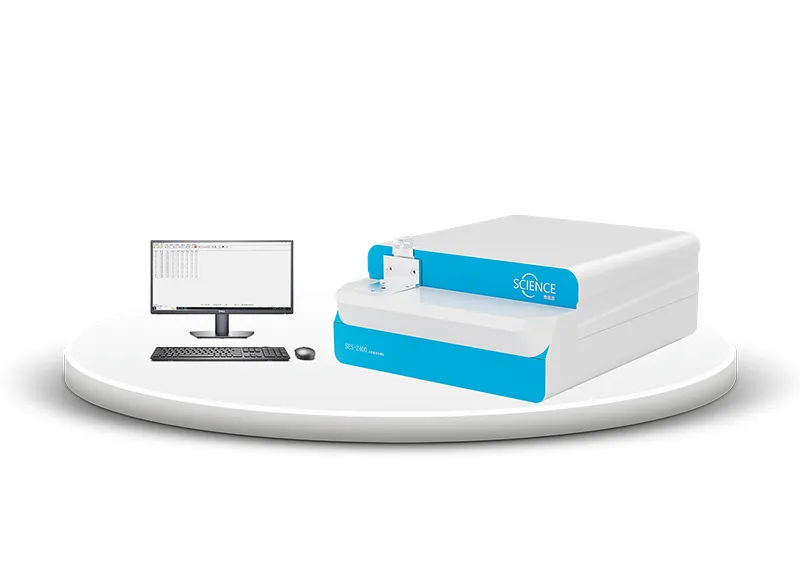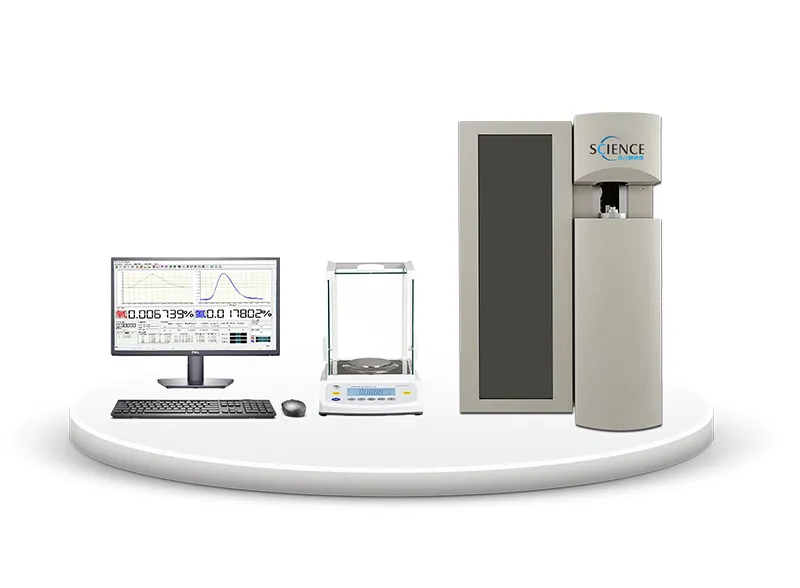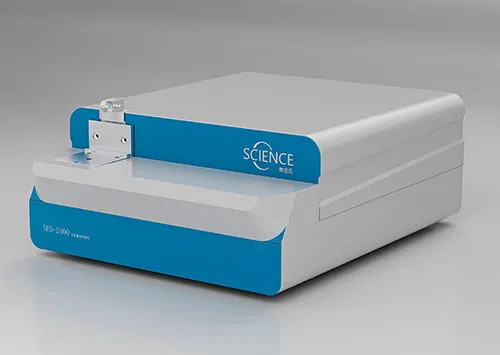
During the use of an optical emission spectrometer, the working curve can drift, leading to increased measurement errors. This drift can be caused by factors beyond the sample's elemental composition, such as changes in the instrument's vacuum, electronic circuits, ambient temperature, humidity, optical chamber temperature, contamination of the optical path, or misalignment of the slit.
Other factors like a contaminated lens, which can cause electrode tip elongation during excitation and increase background noise, as well as variations in argon flow, pressure, and purity, can also lead to curve drift. This is especially critical for C, P, and S elements, whose spectral lines are located in the far ultraviolet region and are particularly sensitive to these changes.
Using a set of high and low standards to perform data calibration before analysis saves time and simplifies the process.
Typically, samples need to be standardized before analysis, with calculations automatically handled by the computer. The standardization samples are chosen to include a wide range of high and low concentrations for all the elements to be analyzed. These standards must be excited at the same time the elemental working curve is created to ensure there is no offset.
For one-point standardization, either a high or low concentration standard is sufficient. However, if the sample concentration range is wide and high precision is needed at low concentrations, a two-point standardization is required. This involves using two standards: a high standard and a low standard.
Each standard can contain a mix of high and low concentration elements, as long as all elements are covered. The high and low concentration values don't have to be at the exact ends of the calibration range, but they should be close to the high and low ends and have a sufficient difference between them.
High and low standards are used to correct for deviations from the working curve caused by instrument drift over time. Re-calibration further corrects for medium- and long-term drift.
To continue using the original working curve, it's necessary to regularly re-calibrate it with re-calibration samples. When using a two-point re-calibration, the two samples should have a large difference in elemental content and be located at the high and low ends of the analytical range. In practice, the low-end re-calibration sample is often a "pure" matrix sample, which contains only the base metal with other elements at trace or zero levels. For example, a high-purity iron sample is used for the low point when calibrating an iron-based curve.
While two samples are theoretically enough to standardize the instrument, more samples are often needed in practice to cover the full high and low range of all elements and ensure accuracy. A multi-point re-calibration can be more efficient and convenient, especially when a single re-calibration procedure is used for a group of alloys.