Argon is the ideal working gas for optical emission spectrometry due to its unique properties that ensure a stable, accurate, and clean analytical process. Here’s a breakdown of the key reasons:
Argon has a low ionization potential, which significantly lowers the breakdown voltage of the analytical gap. At atmospheric pressure, the breakdown voltage in an argon environment is about 1,000V/mm, compared to 3,000V/mm in air. A lower breakdown voltage makes it easier to initiate the discharge, leading to more stable and consistent spectral intensities.
Unlike air, which is composed of diatomic molecules like nitrogen and oxygen, argon is a noble gas with a monatomic structure. When excited, argon produces a simple atomic spectrum with a low continuous background, while air produces complex molecular spectral bands that can interfere with the analysis and increase background noise.
Argon is an inert gas, meaning it does not react with the sample's metal vapor during the high-temperature excitation process. This prevents the formation of non-conductive oxides or nitrides on the sample and electrode surfaces, which would stop or interrupt the analysis. Since air contains oxygen and nitrogen, using it would lead to these unwanted reactions, directly affecting the light intensity values for each element.
Argon is transparent to vacuum ultraviolet (VUV) light below 200 nm, which is crucial for analyzing elements like carbon, nitrogen, sulfur, and phosphorus, whose characteristic spectral lines are in this region. The argon flow purges air from the spark chamber, preventing oxygen and water vapor—both strong VUV absorbers—from interfering with the analysis. This ensures the stability of the excitation and prevents the formation of "white spots" caused by diffuse discharge.
During excitation, the argon gas carries away excess heat and dust particles. This heat dissipation prevents the sample and electrodes from expanding, which could change the analytical gap. The removal of dust prevents "memory effects" and keeps the optical path clean, both of which are critical for accurate results.
Given these benefits, it's essential to use high-purity argon for optical emission spectrometry, a kind of elemental analysis instrument. The purity must meet or exceed 99.999% as specified in the GB/T 4842-2006 standard for argon.
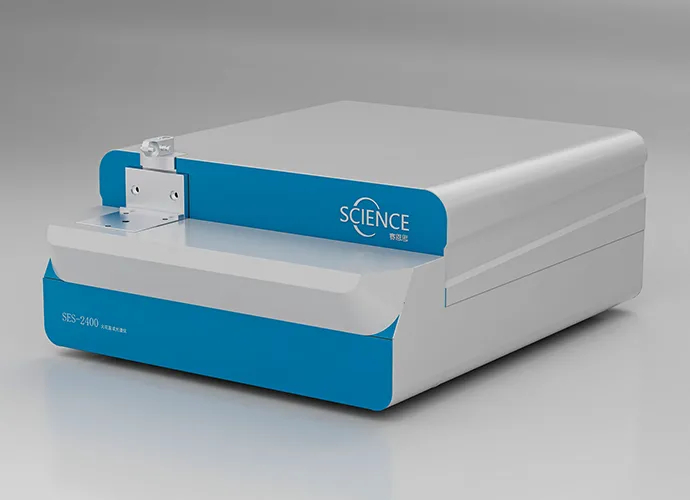
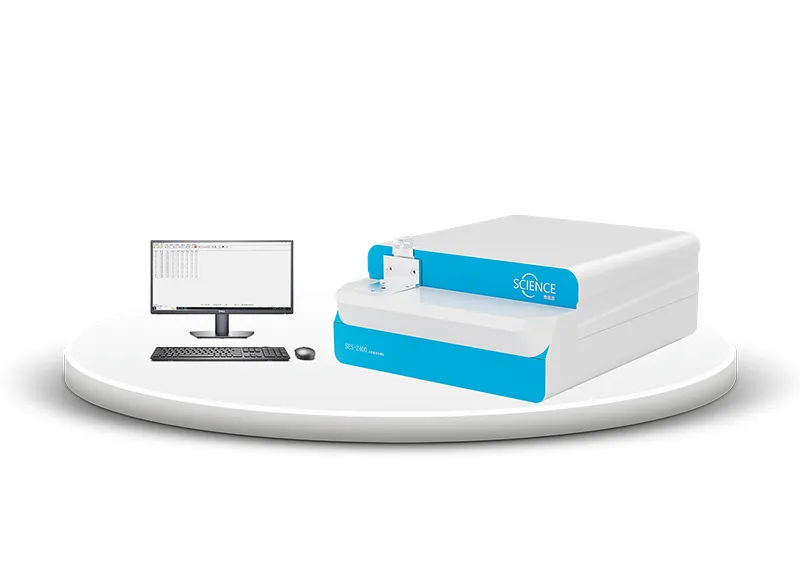
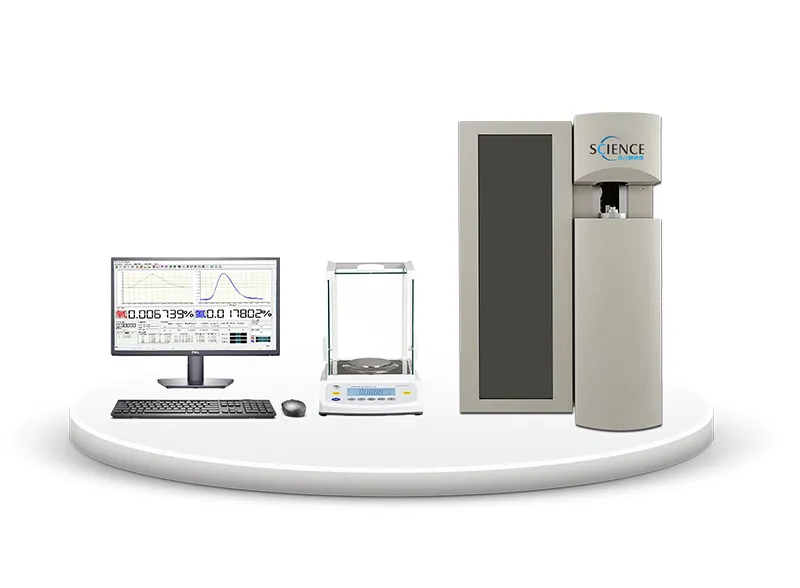
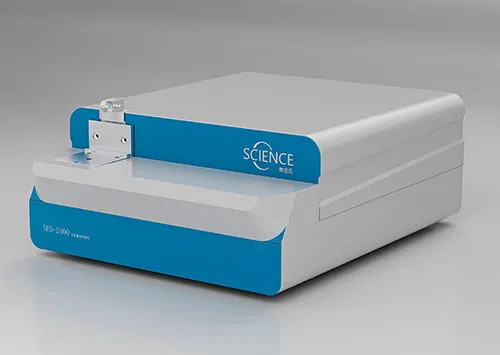
At SYENS, our spectrometer for metal analysis leverages 99.999% high-purity argon to ensure precise, stable, and interference-free elemental measurements. SYENS provides reliable solutions that support industrial quality control and laboratory excellence.
Optical emission spectroscopy using arc and spark excitation (Arc Spark OES) is the preferred method for trace metal analysis to determine the chemical composition of metallic samples. This process is widely used in the metal making industries, including primary producers, foundries, die casters and manufacturing.
Unlike XRF that utilizes an x-ray tube to irradiate the sample, OES uses the energy of a spark that causes the electrons in the sample to emit light, which is converted into a spectral pattern. Each element produces a unique color of optical light.
The difference between spark OES and laser OES is the excitation source. Spark OES uses bursts of high current sparks to turn the metal into plasma and read the light signature. Laser OES uses high-energy laser pulses to create the plasma needed for positive material identification.
In terms of wavelength, that's from 130 nanometers up to around 800 nanometers. OES can analyze a wide range of elements from hydrogen to uranium in solid metal examples covering a wide concentration range, giving very high accuracy, high precision and low detection limits.
Talk to our experts for more help.