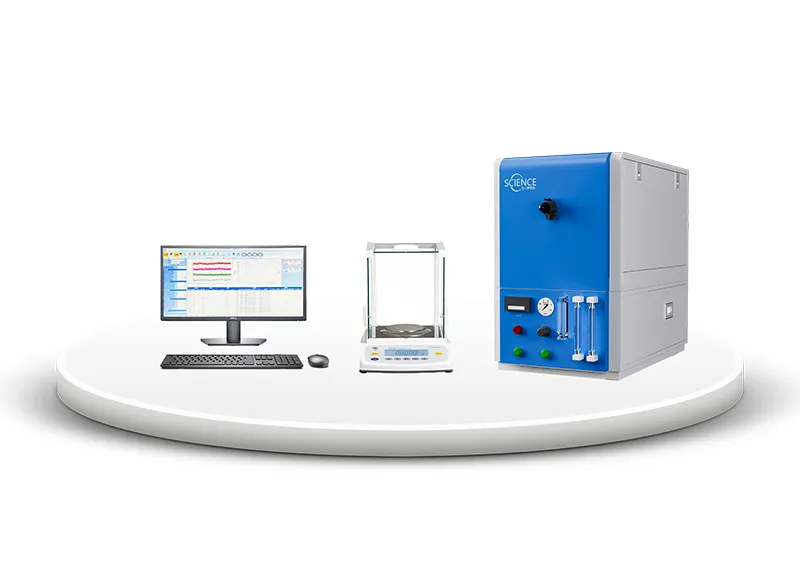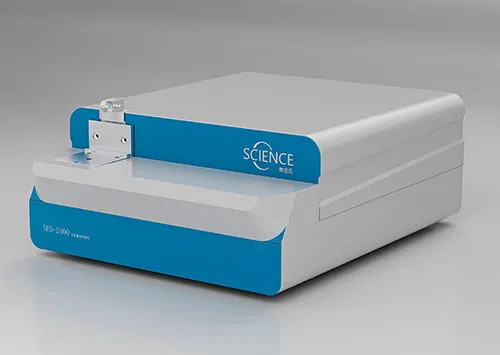
In the current context of declining steel industry production capacity and market demand, expanding the analytical range of carbon-sulfur analyzers to accommodate the diverse needs of analyzing specialty material samples is particularly important. Therefore, let us first explore the properties of carbon and sulfur:
Carbon is widely present in nature and is a familiar element. It exists in the form of compounds in coal, petroleum, natural gas, plants, animals, limestone, dolomite, water, and air. In its elemental form, carbon exists as graphite and diamond. In water and air, it primarily exists as carbonic acid, carbonates, and carbon dioxide gas. Carbon has an atomic number of 6, an atomic weight of 12.01, and an electron configuration of 1s², 2s², 2p². Its outermost shell contains four electrons—two 2s and two 2p electrons—which are valence electrons, exhibiting a strong tendency to share electrons. Carbon often forms four covalent bonds with atoms of other elements, allowing its outermost shell to achieve a stable, inert element structure. As a result, there are over 3 million compounds in nature with carbon as the central atom, while the remaining 104 elements in the periodic table form only about 50,000 compounds.
Since carbonates are easily decomposed by acids or high temperatures into carbon dioxide, and carbon in its elemental forms (carbon black, graphite, diamond), carbides, and various organic compounds readily combust to produce carbon dioxide, the analysis of carbon content is typically conducted by measuring carbon dioxide.
Sulfur constitutes 0.052% of the Earth's crust and is a relatively widespread element. It exists in nature in two forms: elemental sulfur and sulfur compounds. Natural sulfur compounds are classified into two main categories: sulfides and sulfates. Sulfur is located in the third period and sixth main group of the periodic table, with an atomic number of 16 and an atomic weight of 32.064. Its outermost electron shell has six electrons, two short of the fully filled state of the corresponding inert element. Consequently, sulfur can capture or attract electrons from elements with lower electronegativity to form compounds with a -2 oxidation state. Under certain conditions, it can also lose all or part of its six outermost electrons to form compounds with +6 or +4 oxidation states, such as H2S, S2O3²⁻, SO2, SO3, and SO4²⁻. Therefore, sulfur can be quantitatively converted into these compounds for measurement.